

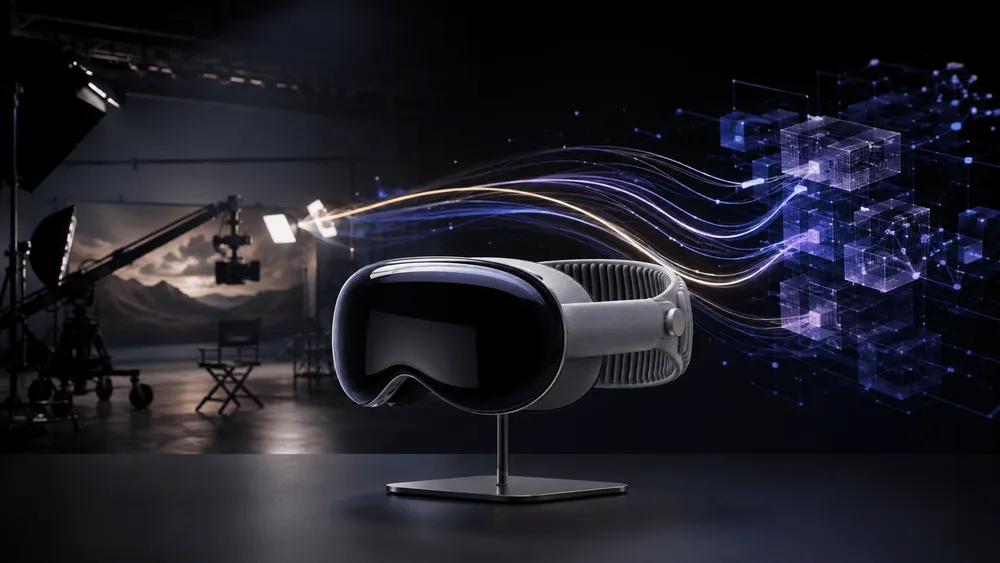
Bloomberg reported on August 21 that Apple is cutting more than 200 jobs across its Vision Pro, Siri, and software teams. The breakdown includes roughly 100 positions in the Vision Pro organization and about 100 more across Siri and software teams. Apple explained that it is reorganizing some teams to advance the business and improve the user experience. This reshuffle represents two distinct moves: reducing costly in-house content production for Vision Pro, and realigning roles at Siri to match a new architecture ahead of its public release.
Apple told Bloomberg that while it is creating new positions, the changes will affect a limited number of existing roles. The company said it would support affected employees through the transition and offer them opportunities to apply for other internal positions. Because Apple has not disclosed the breakdown of cuts by role or detailed the nature of the new positions, it cannot be said that Siri's development effort itself is shrinking. Rather, understanding this personnel move requires separating two questions: who will create content for Vision Pro, and which technologies will be advanced toward shipping for Siri AI.
The Vision Pro Organization: About 100 Positions Affected
According to Bloomberg, on the Vision Pro side, Apple is largely shutting down its headset gaming team and also scaling back the group that produces Apple Immersive Video. Apple reportedly told employees that the changes are meant to align resources with how users actually engage with the product and to shift resources toward future products. Bloomberg reported that this does not mean Vision Pro and visionOS are going away. At minimum, this is not evidence that the product line or its operating system is being discontinued.
Bloomberg reported that Apple is focusing in the near term on smart glasses that won't handle immersive video or advanced gaming, and is also considering another Vision Pro model targeted for late 2028. However, these are not product plans that Apple has officially announced. What can be confirmed from this reorganization is not what Apple plans to do with its next hardware, but rather that Apple is narrowing the scope of what it directly produces in-house for the current Vision Pro.
Behind the reorganization lie overlapping factors: content production costs, limited usage levels, and the shift of resources toward future products. Bloomberg reported that a single episode of Apple Immersive content can cost several million US dollars and involves multiple teams made up of Apple employees and contract staff. At a stage when Vision Pro usage remains limited, sustaining this production model carries a heavy burden. Apple reportedly plans to reduce the number of immersive videos it produces internally while encouraging production by external companies.
However, the supply channel for games is not limited to Apple's internal teams. In October 2025, Apple launched the M5-equipped Vision Pro at $3,499, stating that more than 1 million compatible apps were available, along with more than 3,000 apps built specifically for visionOS and more than 200 Apple Arcade games. The figure of over 1 million includes compatible apps and does not carry the same meaning as the 3,000-plus native apps or the 200-plus Apple Arcade titles. Even so, a smaller internal gaming team does not mean that compatibility with existing apps or the supply from external developers will immediately disappear.
Reducing In-House Production Doesn't Eliminate External Supply Channels
The M5 version of Vision Pro added support for the PlayStation VR2 Sense controller and introduced streaming apps from PCs and home consoles alongside spatial games. From the start, Apple's gaming strategy combined compatible iPad apps, native visionOS apps, and streaming from external PCs and consoles. What this report indicates is shrinking is specifically the organization within Apple that promotes headset-native games—not an announcement ending support features or third-party supply channels. visionOS 27's Foveated Streaming sends experiences running on Mac or PC to Vision Pro using gaze-tracked video compression—a separate entry point from native titles.
The infrastructure for external companies to produce immersive video already exists. In 2025, Apple previewed Apple Immersive works from the Audi F1 Project, BBC, and CANAL+. CNN and HYBE are also part of the same lineup, along with works from MotoGP and Red Bull. Early projects also demonstrated a production pipeline using the Blackmagic URSA Cine Immersive camera and DaVinci Resolve Studio. With commercially available filming equipment and editing software now in place, the conditions exist for creating content without relying on Apple's own production. Whether production costs can be recovered given a limited audience, however, is a separate question. The decision to shrink the internal studio shifts the center of gravity toward enabling external parties to handle everything from filming to editing, with profitability judged by outside production companies and distributors.
Developer sessions for visionOS 27 also indicate continued investment in the platform. In June 2026, Apple introduced updates to RealityKit, Unity, Unreal, and Godot support, along with Spatial Preview, Foveated Streaming, controller APIs, and a toolchain for Apple Immersive Video. Even as Apple reduces spending on in-house production, it is keeping open the pathways for external parties to create spatial apps and video. Going forward, the actual number of works and apps emerging from these channels will be the metric by which Vision Pro's content strategy should be measured.
New Siri Architecture and Role Realignment
The changes on the Siri side arrived as the product moves closer to shipping. On June 8, Apple announced that it would offer Siri AI to developers for testing, with a public beta planned for users in late 2026. Siri AI combines next-generation Apple Foundation Models running on-device and via Private Cloud Compute, a system orchestrator that controls the overall experience, Spotlight's index, and App Toolbox. It's designed to handle personal context, on-screen information, and actions that span multiple apps.
Bloomberg reported that cuts will also extend to Siri and to Intelligent Systems Experience (ISE), the software engineering division responsible for part of the device's AI features. The report states that because the new architecture requires different expertise, Apple is eliminating some roles to reallocate resources while also creating new positions to support the revamped Siri. However, the report's sources did not specify which particular skills or roles are being cut or hired for. It cannot be concluded that a specific technology is the cause behind both the AI infrastructure changes and the job cuts.
Siri AI has not yet reached general availability. Between the developer testing phase and the beta version expected later this year, it will become clear whether Apple can maintain quality and timing for the public release, and in which areas it will expand the newly created positions. For Vision Pro, what remains to be seen is whether the frequency of externally produced content holds up after the reduction in in-house production, and whether the production tools in visionOS 27 actually get used. The figure of more than 200 job cuts alone does not determine the future of either product. The boundary between what Apple continues to produce itself and what it hands off to external developers or to Siri's newly created roles is the change worth watching next.